
WOF Talks: Three Major Themes Focus on New Industry Changes
On October 9–11, the 2026 ASEAN Int'l Optics Expo (WOF | Bangkok) was held in Bangkok. On the second day of the exhibition, the WOF Talks approached different areas of the eyewear industry through three themes, from store operational efficiency to myopia prevention and management, and then to AI technology and personalized lens design. It focused on practical issues in retail operations, vision health, and technology application, adding a layer of professional content and industry exchange beyond the on-site product displays and business matchmaking.
01 Cutting-Edge Efficiency: The New Blueprint for Optical Retail
For optical retail today, “efficiency” is not just about increasing operating speed. Competition has already shifted from product comparison to comprehensive competition in operational efficiency, service quality, and refined user operations. This forum took “cutting-edge efficiency” as its starting point to explore the changes in business methods and service models behind efficiency improvement.
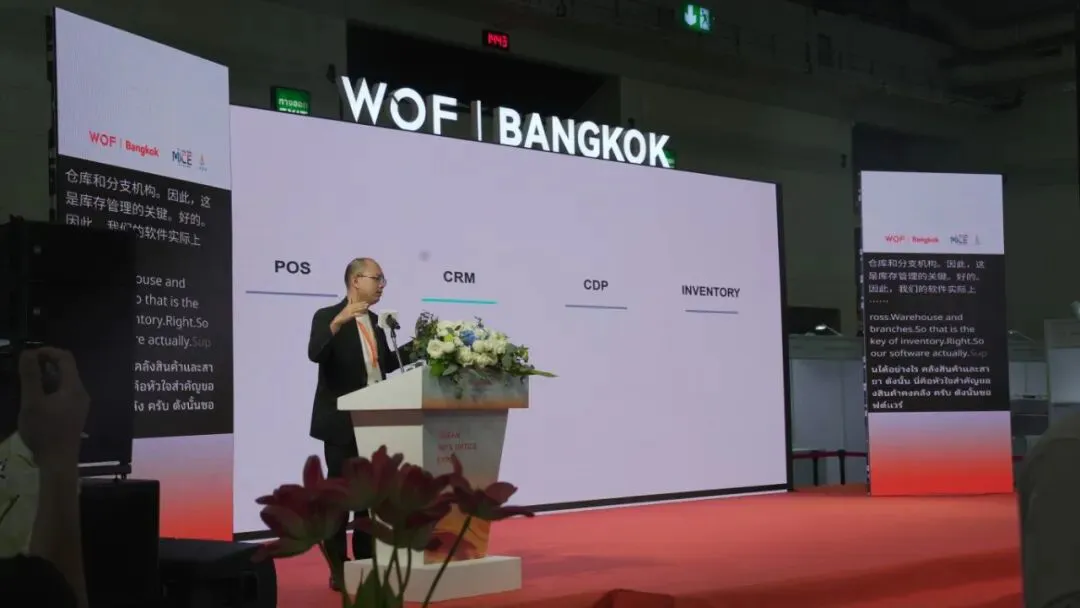
First, upgrading refined store operations. It explored how traditional optical stores can optimize the entire optometry and eyewear fitting service process, streamline redundant steps, and improve service efficiency, while optimizing category structure, revitalizing inventory resources, reducing store operating costs, and breaking free from inefficient internal competition.
Second, reconstruction of consumption scenarios and services. It analyzed the current trend of consumers’ eyewear needs upgrading from “functional correction” to multiple dimensions such as “visual experience, appearance and styling, and health maintenance,” and explored practical paths for stores to transform from a single sales scenario into an eye health service experience center.
Third, practical application of digital tools. Focusing on lightweight digital operations, it discussed how to use tiered customer management, consumption data reviews, intelligent follow-up, and other methods to carry out full-cycle user maintenance and improve customer stickiness and repeat purchase conversion.
02 Myopia Epidemic in Asia: New Approaches in Prevention and Management
As the incidence of myopia among adolescents and the general population in Asia continues to rise, vision health has long become an essential need for all and a core service track with great potential in the eyewear industry. Myopia prevention and control is no longer merely a public welfare issue; it is also a core breakthrough for retail stores to expand service boundaries, raise professional barriers, and build differentiated competitiveness. This forum focused on the current state of myopia prevention and control in Asia, moved beyond traditional eyewear fitting service thinking, and focused on the “prevention + intervention + long-term management” full-chain service system for professional exchange.
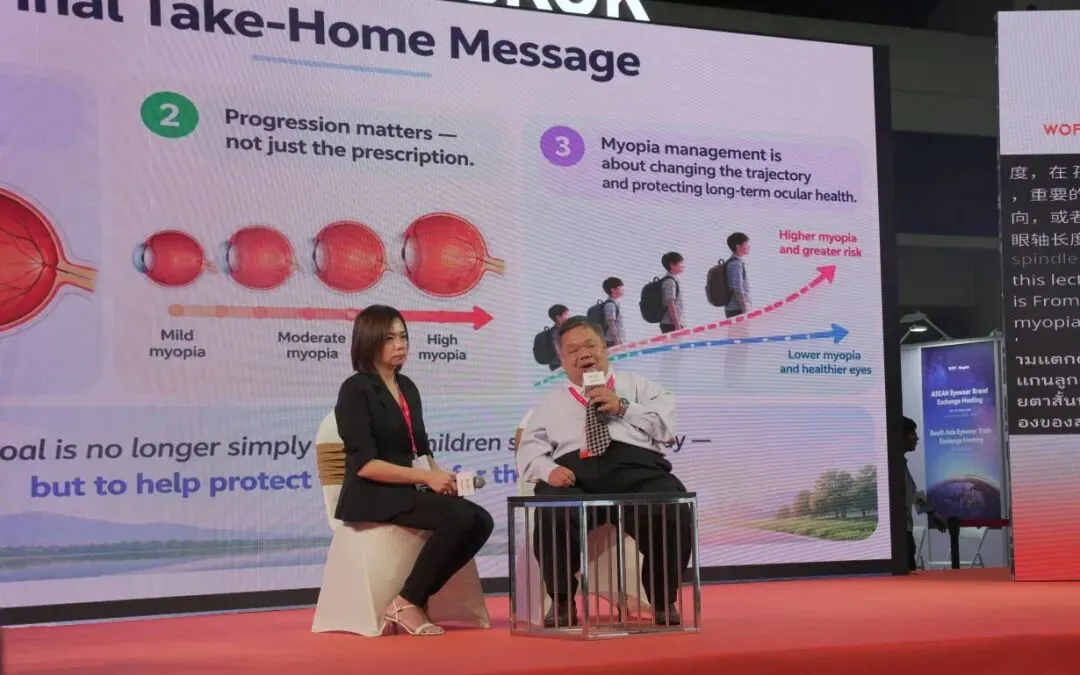
On the one hand, it deeply analyzed the regional characteristics, age patterns, and influencing factors of myopia among Asian populations. Combining the unique eye-use environment, daily routines, and consumer cognition characteristics of the ASEAN region, it precisely broke down the core causes of myopia problems in the region and clarified the real needs and suitable implementation directions for localized myopia prevention and control services. On the other hand, moving beyond the traditional single-correction mindset, it explored an integrated service model of preventive intervention, regular screening, and scientific correction that is more suited to the ASEAN market for vision problems across different age groups and eye-use scenarios.
03 Visual Behavior: From Understanding the Wearer to Personalized Lens Design with STEPPER OptiAI
The same pair of glasses serves completely different visual needs for different wearers. Personalized vision solutions tailored to each individual have already become a core trend in the iteration of optical technology. This forum started from understanding the wearer, focused on visual behavior and individual differences, and extended the discussion to personalized lens design based on STEPPER OptiAI.
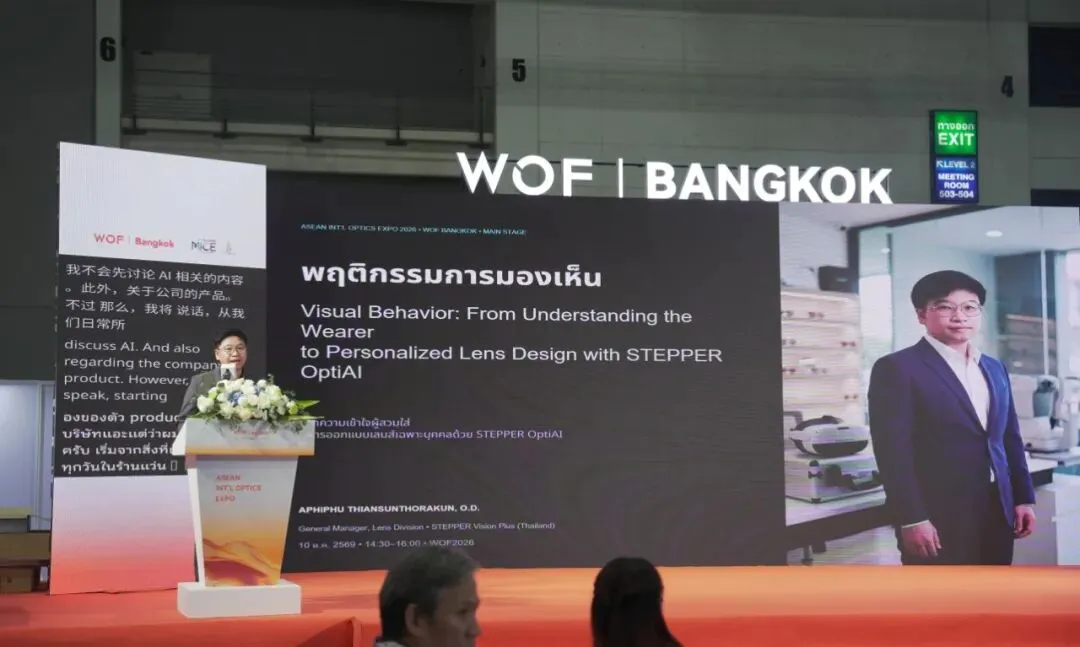
From standardized products to personalized solutions that pay more attention to wearers’ actual needs, the addition of AI technology has also led the industry to begin thinking: Can future lens design become even closer to each person’s visual usage scenarios? This is not only a change at the technical level, but also relates to how the eyewear industry can further understand consumers and improve the visual experience.
With the exhibition now concluded, the three thematic discussions of the WOF Talks have also left new thoughts for this industry exchange. Retail operations, vision health, and AI technology application remain important issues in the ongoing development of the eyewear industry.